
There is a very specific kind of whiplash that happens when you sit down expecting “another fine-to-forget Marvel streaming experiment” and instead end up staring at your television like you just accidentally discovered a lost prestige drama from the golden age of cable. Wonder Man is not merely good, and it is not “good for an MCU show.” It is not “better than expected.” It is flat-out one of the best things Marvel has produced in years, and that statement feels slightly surreal to type considering this is a series centered on a character most people either vaguely recognize from a Wikipedia scroll or have never heard of at all.
Conceptually, Wonder Man is deceptively brilliant. A story about a secretly super-powered actor chasing relevance to become a superhero on the big screen while inside a world dominated by superheroes is inherently meta, but the show resists the temptation to turn itself into a smug satire machine. Instead, it uses Hollywood as a pressure cooker for exploring identity, insecurity, ambition, and the quiet terror of realizing you may never become who you thought you were supposed to be.
The superhero-esque elements function as seasoning rather than the main course. This is a character-driven series that is more about trying to find yourself in the world and less a comic-book adaptation about another masked super-powered being with a tragic past that fights the good old fight on the streets of NY, which is precisely why it works. Everything aligns toward that goal of being grounded: the tone, the structure, the performances, and the restraint.
The contrast between Wonder Man and most MCU series is undeniable. Across the streaming slate, it has become easy to spot recurring issues: awkward lighting, inconsistent tone, sloppy pacing, half-baked arcs, and CGI that looks like it was rendered on a stressed-out laptop at 3 a.m. Even the better-received shows often come with a list of caveats. Wonder Man does not. The lighting is excellent. The structure makes sense. The writing holds together. The emotional throughlines track. It feels elevated in a way that suggests experience, confidence, and taste were all present at every level of production.
There is an almost shocking sense of consistent competence running through the entire eight-episode season. It abandons the typical formulaic system that Marvel Studios has firmly gripped for nearly 20 years and it all just works without it. The show also never feels desperate to tease the next thing, which is both great and disappointing because, while we do not need it, we would love another season of Wonder Man in some form or another if it retains this level of artistry and craftsmanship that so many Disney+ shows lack.
Watching it feels refreshingly less like consuming corporate content that wants to sell more toys and t-shirts and more like settling into a well-crafted drama series that simply happens to exist inside a superhero universe.
The eight-episode season length turns out to be exactly right. Long enough to develop characters. Short enough to avoid bloat. Dense without being exhausting. When the final episode ends, you feel satisfied rather than stranded. That feeling alone places Wonder Man in rare company.
Perhaps for the first time in a very long time—maybe the second time if you are feeling generous—it feels like Disney has figured out how to tell a complete story in the format of a limited televised event. Not a prologue disguised as a season. Not a commercial for future content. A story with a beginning, a middle, and an end. The writers and showrunners manage to make audiences feel something genuine for Simon Williams, a character many viewers probably dismissed before pressing play. That alone is a minor miracle in modern franchise storytelling.
Let’s start with the most immediately noticeable shock: this show looks incredible. Not “good for TV.” Not “MCU serviceable.” But actually incredible. The production design is tactile, textured, and grounded in a way that makes you feel like you could step into these sets and trip over a cable. The lighting, for example, actually appears to have been planned by human beings.
It might seem odd to point that out but I have found, often, that shows these days have lost that sense of artistry that proper lighting can provide and instead what everything to look like it was shot on your iPhone Pro Max. It bothers me to no end seeing that and in Wonder Man, it filled me with joy to see that problem just flat-out does not exist. But the lighting isn’t the only thing that makes this series feel professional with quality stitched into the fabric of every scene.
The camera lingers instead of panicking. Practical locations dominate. Costumes look worn-in rather than freshly unboxed. And perhaps most astonishing of all, the series does not lean on endless CGI to prop itself up. When visual effects appear, they exist as an accent, to enhance a scene, not replace it. There are no rubbery green-screen faces. No floating weightless bodies. No digital sludge pretending to be spectacle. The aesthetic feels confident, restrained, and intentional. In an era where blockbuster television often resembles an expensive screensaver, Wonder Man looks like someone actually cared what the frame looked like.
But what about the writing?
This is where the show quietly starts lapping most of its streaming contemporaries. Conversations and dialogue feel natural. Jokes land without feeling like that tired MCU formula you have probably heard about. Emotional beats are allowed to breathe and don’t feel like a box being mindless checked. Characters speak like people rather than exposition delivery systems.
The pacing is especially impressive, because limited series have developed a nasty habit of either sprinting through story like they are late for a meeting or padding themselves into a bloated mess of wheel-spinning. Wonder Man somehow avoids both. Episodes flow into one another with purpose. Each installment feels necessary. Plotlines build, crest, and resolve with an internal rhythm that suggests actual planning occurred before cameras rolled (something Disney has been ignoring for a long time, it would seem). It is smooth in a way that modern franchise television almost never is.
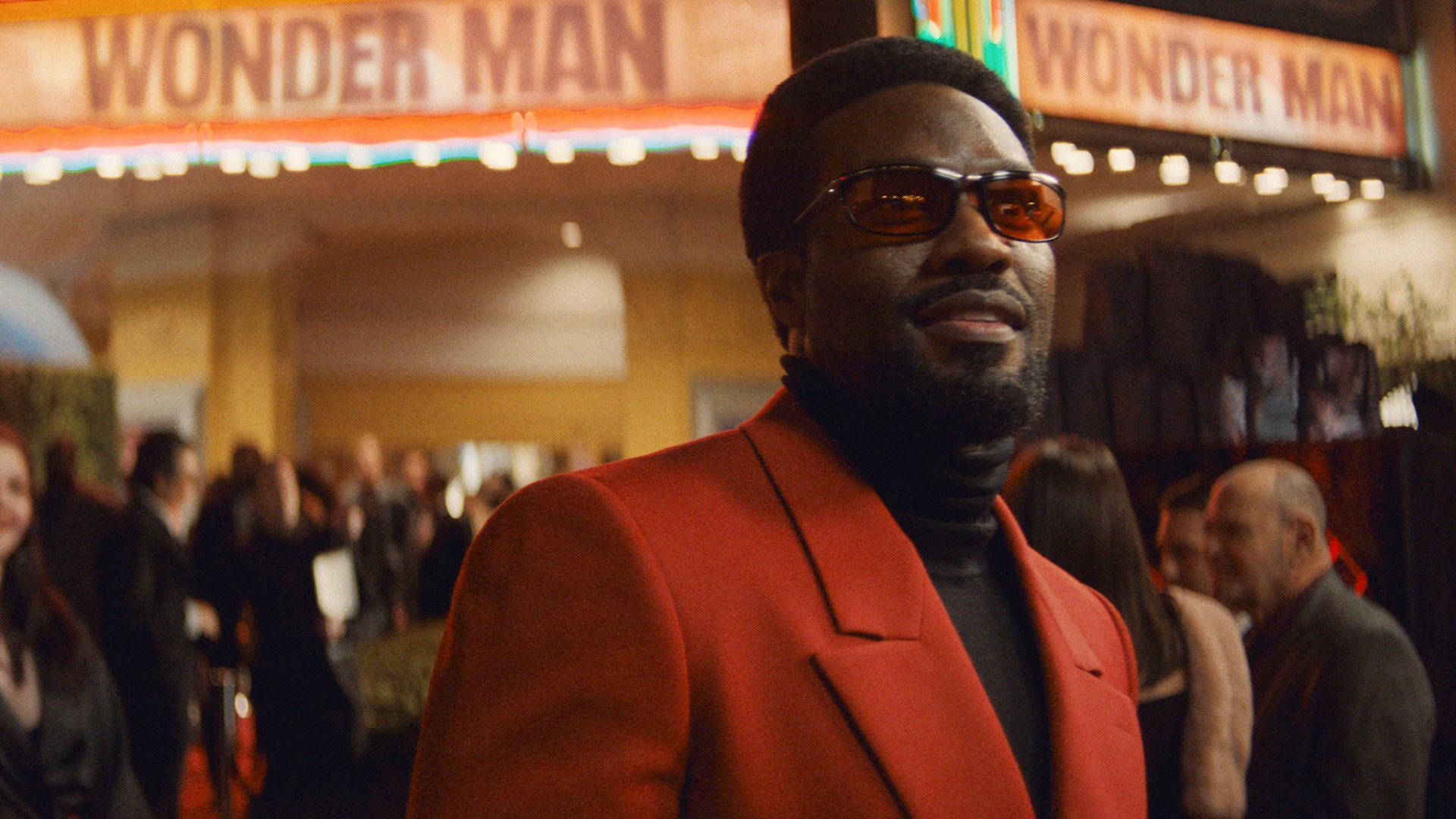
Front and center in all of this is Yahya Abdul-Mateen II, who many viewers will immediately recognize as the ferociously unhinged Black Manta from DC’s Zack Snyder–era Aquaman films. He is joined by a roster of familiar faces you may not be able to place by name but absolutely recognize on sight, along with the endlessly delightful Sir Ben Kingsley, who previously made his MCU debut as “The Mandarin” in Iron Man 3 before being revealed as washed-up actor Trevor Slattery, a role he later reprised in Shang-Chi—one of the only other genuinely excellent post-Endgame Marvel projects. That connection is not accidental. Wonder Man is co-created by Destin Daniel Cretton, who also wrote and directed Shang-Chi (and the upcoming Spider-Man: Brand-New Day).
Adding to Cretton’s superb level of understanding of this universe and the perspective he offers is showrunner Andrew Guest (30 Rock, Community). What Guest does with the show is less trying to make you laugh (he is pretty good at that) but more about making you feel immersed. He and Cretton have found a way to take a character you do not know much about, and pull you into his world effortlessly to care about their struggles, their passions, and everything one has to go through to realize their dreams.
It is clear that the vision and writing of Cretton and Guest, and a solid performance from Yahya Abdul-Mateen II, managed to anchor the entire thing with a vulnerable, grounded presence that makes Simon Williams story instantly compelling, even if you walked in with zero emotional investment in (or recognition of) the character. Ben Kingsley’s return as Trevor Slattery is not a nostalgia stunt either; it is a fully integrated performance that balances absurdity and melancholy in equal measure. Though we would add that this time around, Trevor feels more grounded, focused, and less like a kooky old man who doesn’t know where he is most of the time.
You may recognize faces from comedy, prestige drama, or genre television, but across the board, everyone feels perfectly cast. No one feels stunt-cast. No one feels misused. Of course, the “anti-woke” mob may still complain but there is no credence to be found with any ignorant Twitter perspectives on Wonder Man. The ensemble works here because the show understands how to give each actor space without turning the narrative into a juggling act and does not make the mistake of keeping a side character around too long to overstay their welcome.
Some viewers will inevitably argue about how great it truly is. That is fine. Art is subjective. But it is difficult to deny that Wonder Man represents a level of coherence, confidence, and craftsmanship that has been sorely missing from the MCU’s television output. It feels like the Andor of Marvel shows. More importantly, it feels like one of the very few post-Endgame projects that understands why people fell in love with this universe in the first place.
Wonder Man is a rare, charming delight. It is thoughtful. It is well-made. It is emotionally grounded. It is consistently engaging. Everything works. And in 2026, that might be the most shocking plot twist Marvel has ever delivered.
